AI in Our Healthcare: Promises, Pitfalls and the Path Ahead
Posted on 1 October 2026
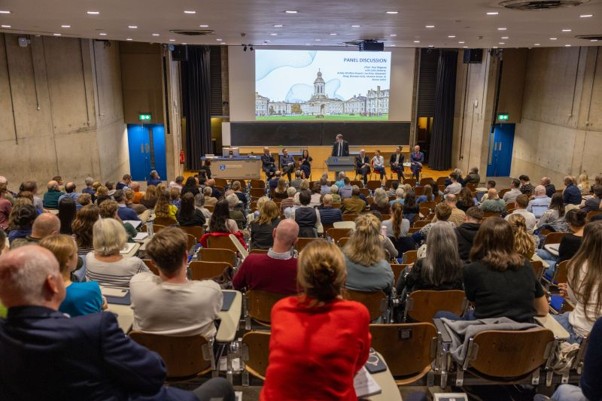
A packed theatre at Trinity College Dublin recently hosted a thought-provoking public discussion on “AI in Our Healthcare: Promises, Pitfalls and the Path Ahead”, exploring how artificial intelligence is already transforming healthcare and what the future may hold.
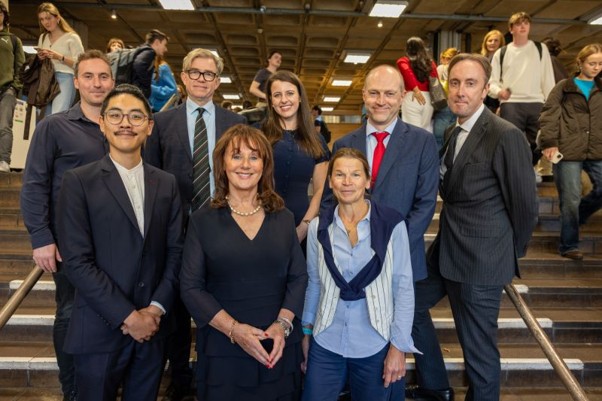
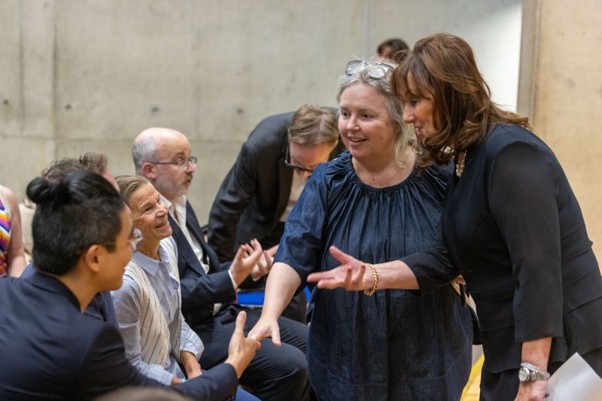
Organised by the Fellows of Trinity College Dublin and chaired by Professor Rose Anne Kenny, Professor of Medical Gerontology, the event brought together experts from medicine, psychiatry, surgery, neurology, medicines regulation and clinical training, alongside students, academics, healthcare professionals, hospital staff and members of the public.
The event was opened by Provost Professor Linda Doyle, before a series of presentations examined the rapidly evolving role of AI across healthcare.
Exploring the impact of AI on healthcare
Professor Alexander Deng explored how artificial intelligence may reshape the role of doctors and the delivery of clinical care, considering both the opportunities AI presents and the importance of maintaining clinical expertise and judgement.
Professor Brendan Kelly, Professor of Psychiatry at Trinity College Dublin, focused on the human dimension of healthcare and the need to consider how people interact with new technologies. In his presentation, he reflected on the “waves of existential panic” that have accompanied previous technological developments, from the motorcar and radio to the arrival of the internet. His parting message to the audience was simple: “Don’t panic!” Ultimately, he emphasised, healthcare remains fundamentally about people.
Melanie Senior explored the growing role of AI in drug discovery and the pharmaceutical landscape, highlighting the potential for artificial intelligence to change how new medicines are developed.
Looking towards the operating theatre of the future, Professor Ronan Cahill examined the intersection of robotics, AI and surgery, considering how these technologies may influence surgical practice.
A range of perspectives
The presentations were followed by a panel discussion chaired by Paul Ridgway, with contributions from Professor Colin P. Doherty, Dr Ashley Stratton-Powell and Dr Lisa Kiely. The panellists brought contrasting perspectives from surgery, neurology, medicines regulation and clinical training.
While some speakers highlighted the enormous potential of AI to improve healthcare, others raised important concerns about its limitations, risks and potential impact on professional skills.
The discussion demonstrated that there is no single perspective on the role of AI in healthcare. Instead, its development raises complex questions around clinical responsibility, education, regulation, professional expertise, patient safety and the human relationship at the heart of healthcare.
Keeping people at the centre
The breadth of the audience reflected the widespread interest in the future of AI, with students, academics, healthcare professionals, hospital staff and members of the public all contributing to the discussion.
The evening highlighted both the excitement surrounding the possibilities of artificial intelligence and the importance of approaching its development thoughtfully and responsibly.
As AI continues to evolve, an important challenge will be ensuring that technology enhances healthcare while keeping human judgement, responsibility and patient care at its centre.
The event provided an opportunity to consider not only what AI may make possible, but also how we can ensure that its use benefits patients, healthcare professionals and society as a whole.