Health Assessment - Oral Health Assessment
Oral Health
The oral health domain in TILDA comprises objective clinical assessments and participant-reported measures designed to evaluate oral health, dentition, and oral function in older adults. Measures collected across waves include dental examinations, tooth loss, periodontal health, denture use, oral hygiene, and self-reported oral health and oral health–related quality of life, providing information on both clinical oral status and functional outcomes. These assessments support research into healthy ageing, nutrition, frailty, systemic disease, cognitive ageing, quality of life, healthcare utilisation, and broader health outcomes.
Oral Health Measures
Overview
Measuring: Number of natural teeth, use of dentures, Community Periodontal Index of Treatment Need (CPITN) on index teeth (to evaluate periodontal status), coronal caries at cavitation level and visual level, Root Caries Index of Katz14 (measures presence of root caries), coronal tooth wear into dentine and tooth contacts between maxillary and mandibular teeth in the Maximum Intercuspal Position (MIP) (to evaluate the functional dentition and the need for replacement of teeth).
Equipment used: Dental chair with floor mounted Daray LED examination light (Model- XL200 LED examination light, 12–30v/5.8–8.2w), standard plane dental mirror and WHO recommended Community Periodontal Index of Treatment Need (CPITN) probe-E.
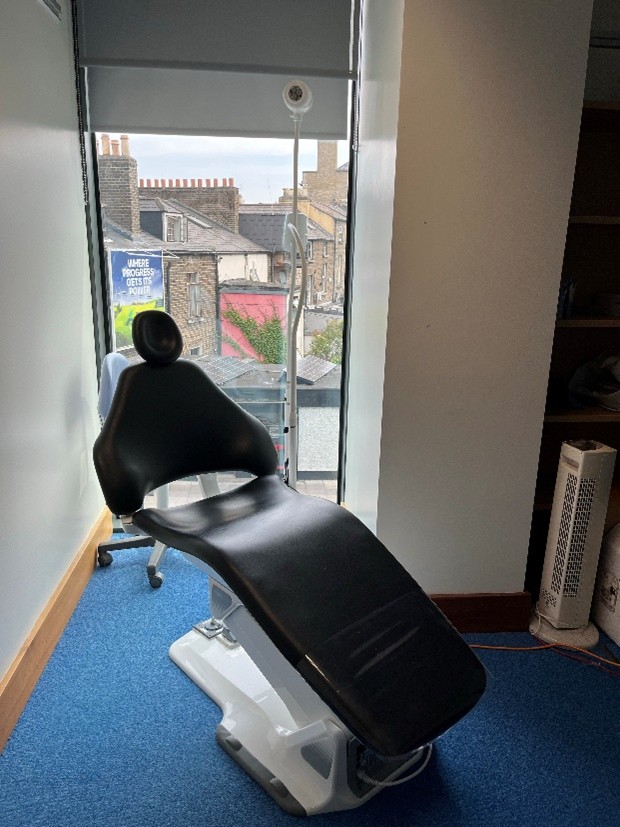
Equipment Description: The dental chair with floor mounted Daray LED examination light provided bright, shadow few illumination which allows for consistent visualisation of both hard and soft oral tissues and accurate detection of oral and periodontal conditions.
The standard plane dental mirror was used to obtain vision of areas of the oral cavity that could not be visualised directly, to retract the cheeks, lips and tongue where necessary, and to reflect light into difficult-to-access regions of the mouth.
The CPITN probe was used to perform periodontal assessments. The probe has a 0.5 mm ball tip and colour-coded markings that allow for standardised assessment of periodontal health while minimising tissue trauma.
Assessment Type: Centre Assessment Only
Protocol
- Participants who conducted a health assessment at the TILDA health centre were invited to have an oral health assessment.
- The research nurse asked the participant if they would like to see the dentist at the beginning of their health assessment, before starting the cognitive tests.
- As a dentist was not available during the full TILDA centre opening hours, only those participants who completed a health assessment during the dentist’s hours were invited to have the dental assessment.
- If more convenient for the participant, they could return at a later time or date to complete the assessment.
- The assessment took 10 minutes. The dentist conducted the following assessments;
- Periodontal examination
- Coronal tooth wear
- Denture status
- Need for prosthetic replacement of missing teeth
- Occlusal contacts
- Dental status
- Clinical oral dryness score
- If any dental disease or infection was detected, the respondent was informed of this and advised to attend their regular dentist.
Collection Waves
| Measure | Wave 1 | Wave 2 | Wave 3 | Wave 4 | Wave 5 | Wave 6 |
|---|---|---|---|---|---|---|
| Oral Health Assessment | X | X |
Example TILDA Papers
- Winning, L., Naseer, A., De Looze, C., Knight, S. P., Kenny, R. A., & O’Connell, B. (2022). Tooth loss and cognitive decline in community dwelling older Irish adults: a cross-sectional cohort study. Journal of Dentistry, 119, 104077.
- Naseer, A., McLoughlin, J., Donoghue, O. A., Kenny, R. A., & O’Connell, B. (2022). Dental health status of community-dwelling adults aged 50 years and over in Ireland. A cross-sectional analysis of the Wave 3 TILDA cohort. HRB open research, 1, 26. https://doi.org/10.12688/hrbopenres.12891.3
- Naseer, A., Mc Garrigle, C., McLoughlin, J., & O’Connell, B. (2024). Tooth loss is associated with prevalent diabetes and incident diabetes in a longitudinal study of adults in Ireland. Community Dentistry and Oral Epidemiology, 52(1), 111-119.